
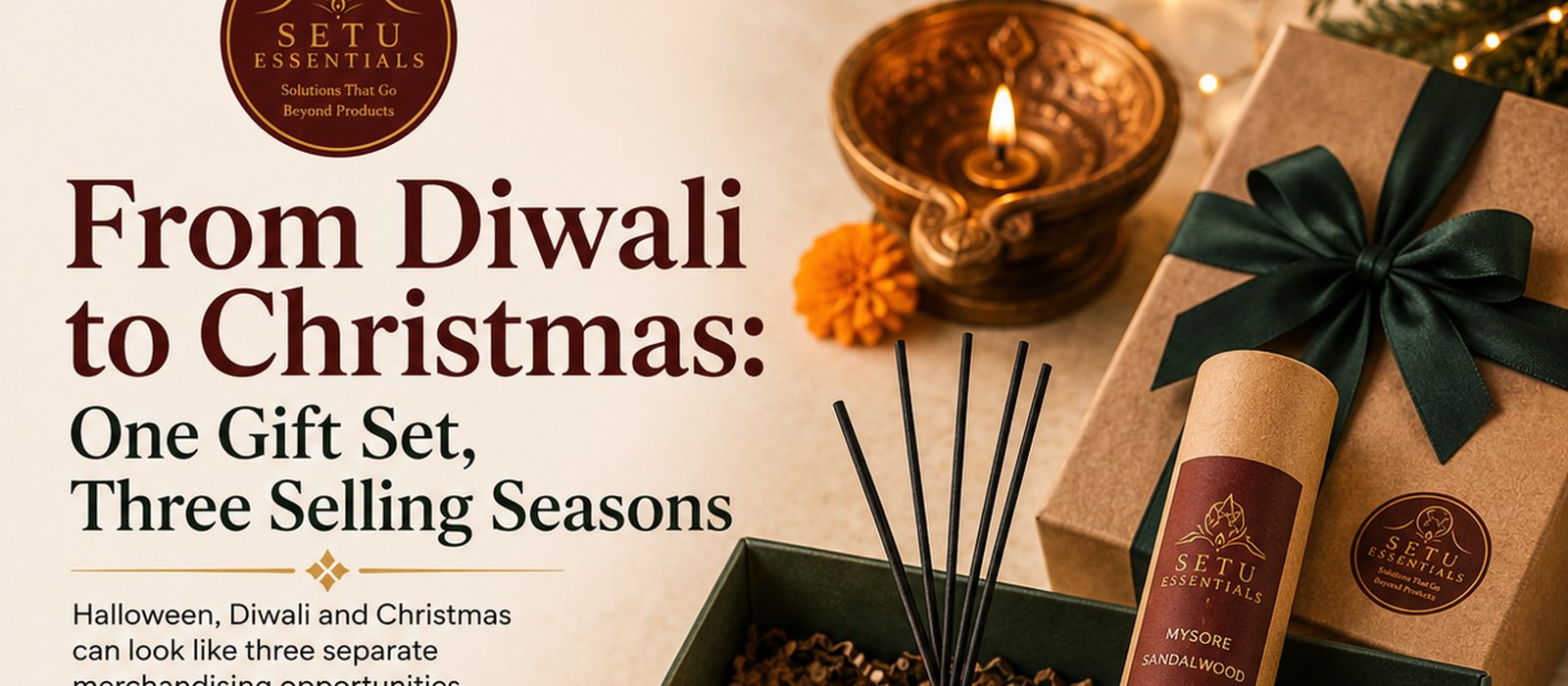
Retailers are entering one of the busiest gifting stretches of the year. Halloween, Diwali and Christmas can look like three separate merchandising opportunities, but building a flexible gifting assortment that works across all three does not require three completely different product strategies.
The problem with seasonal only inventory
Stocking purely for one occasion at a time has a familiar downside. Halloween products can become difficult to sell once November arrives. Diwali focused pieces often have a shorter selling window than other holiday stock. Christmas products are highly seasonal by nature and tend to lose relevance the moment the season ends. Order enough highly specific SKUs to cover all three properly, and a meaningful amount of cash and shelf space ends up tied down in inventory that only earns its keep for a few weeks at a time.
The opportunity: adaptable gifting
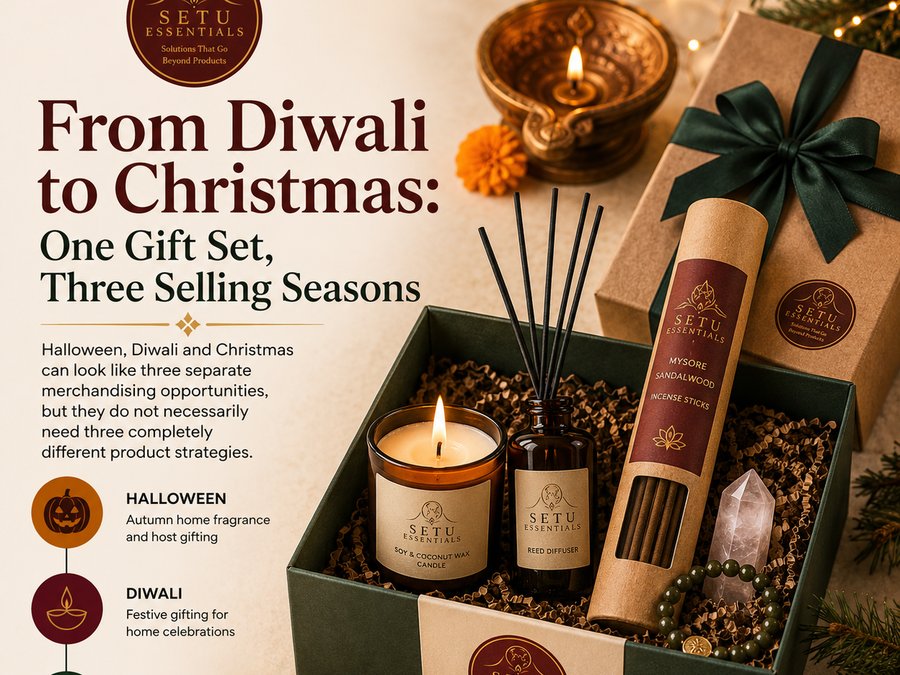
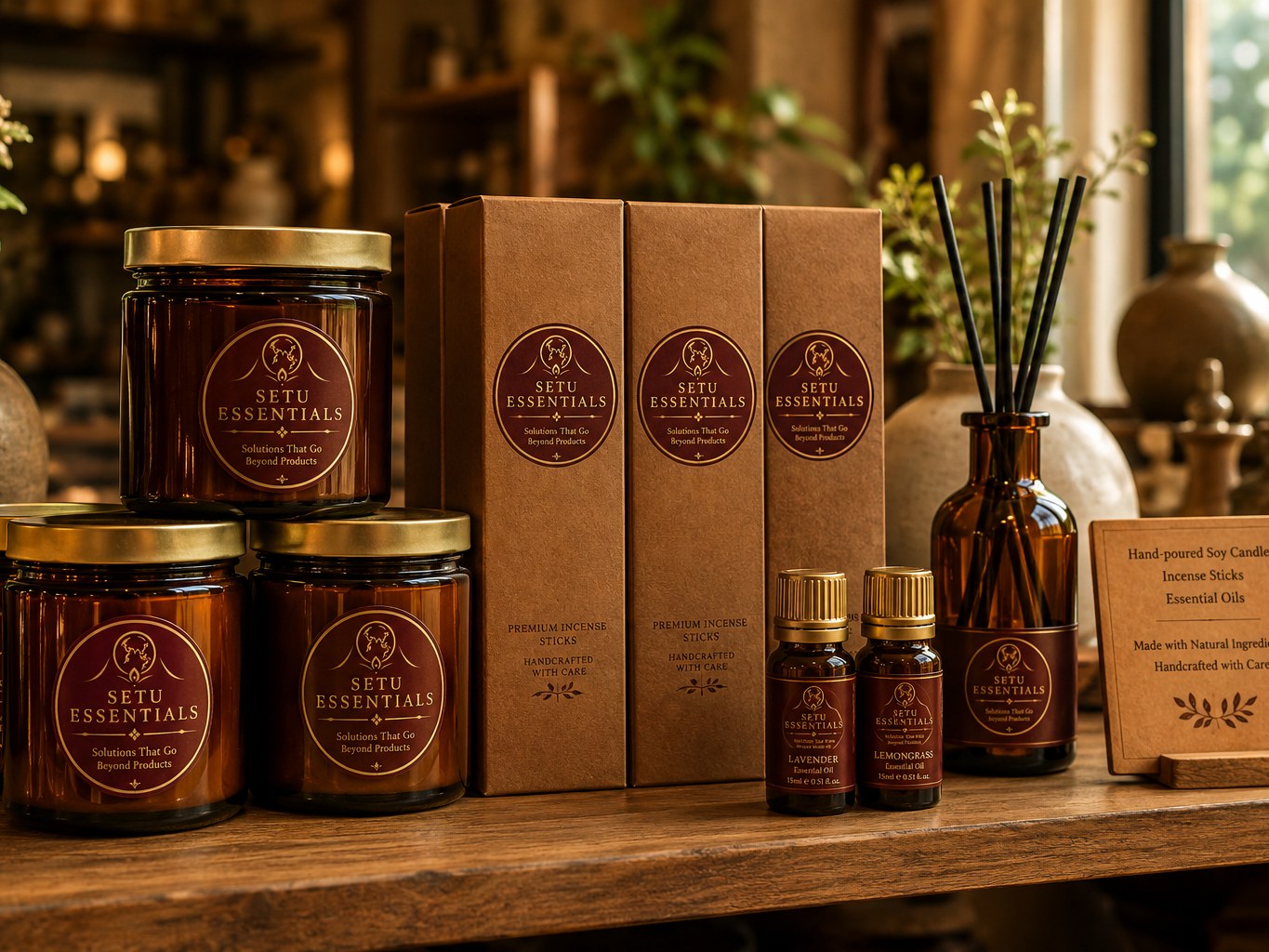
The alternative is not to avoid seasonal buying altogether, it is to choose products that are not overly tied to a single holiday in the first place. A beautifully presented, premium gift set built around a candle, a reed diffuser, incense, a crystal, or a bracelet, wrapped in strong packaging, can move through several occasions without needing a full restock or a different product line each time. The presentation carries the season, not the product itself.
Why wax choice matters here
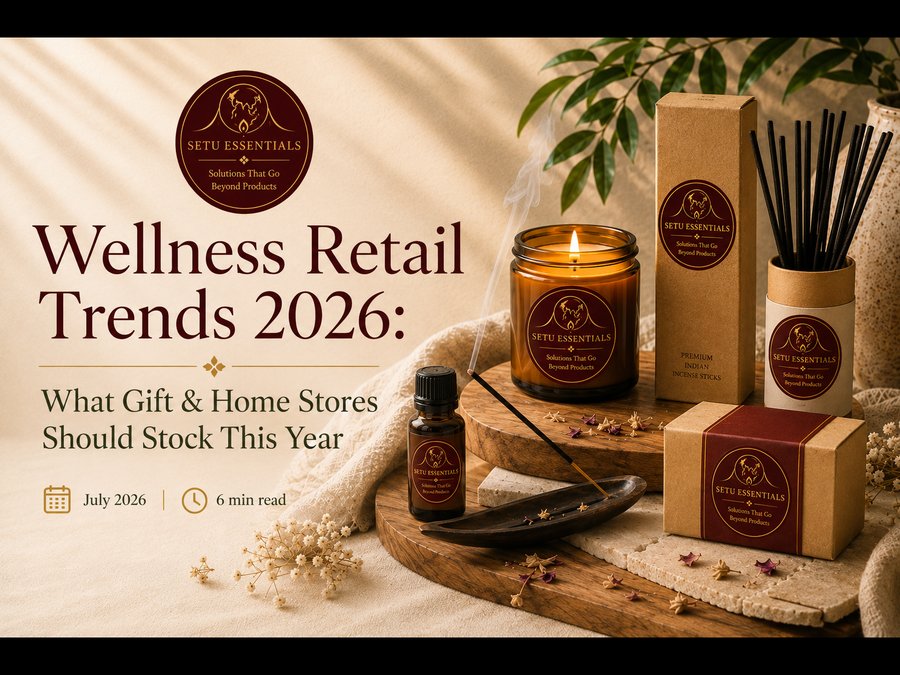
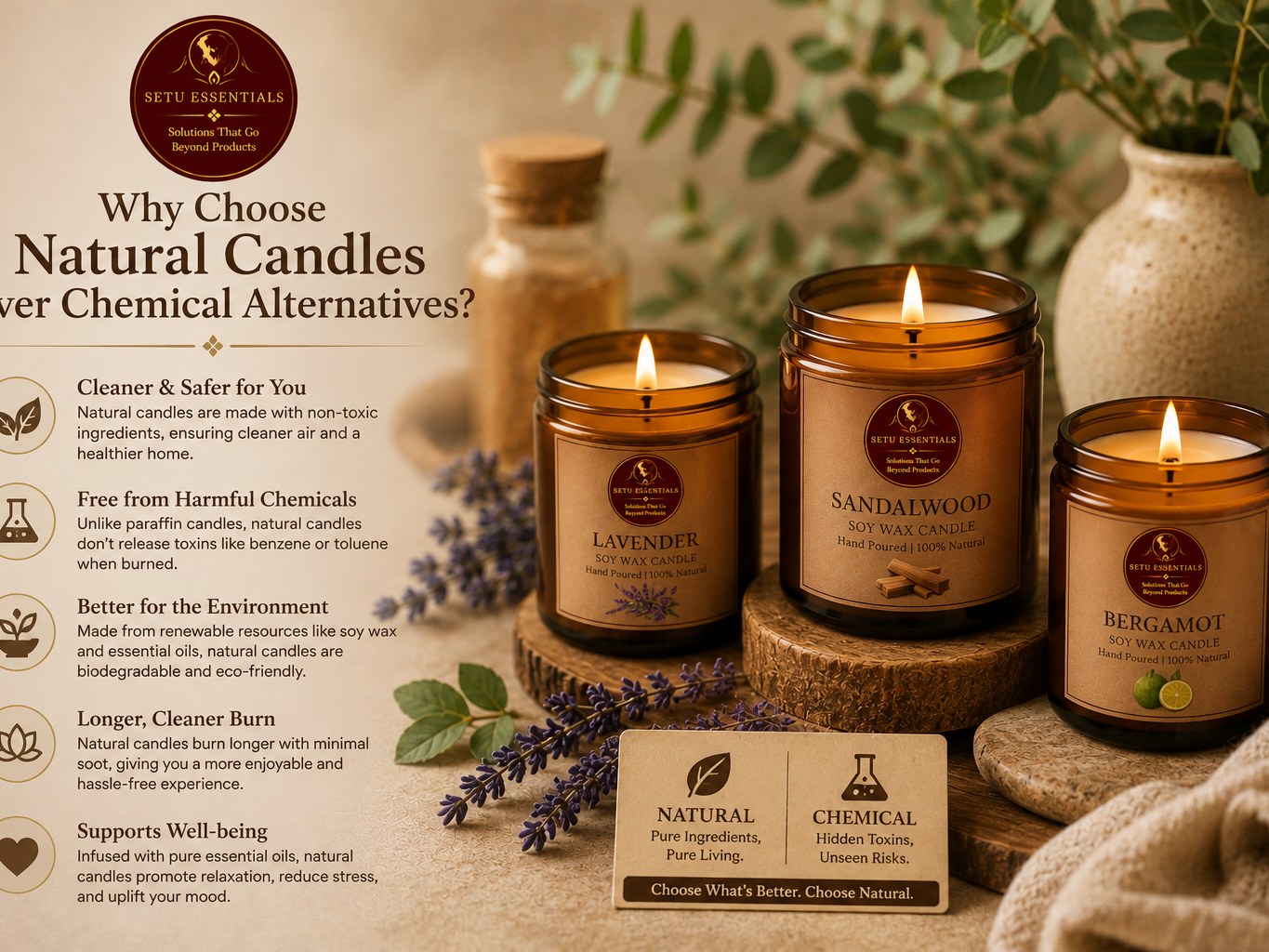
This is also where the shift toward natural wax blends we covered in our Wellness Retail Trends piece earlier this year becomes practically useful, not just a talking point. A soy and coconut wax blend fits comfortably into premium wellness and home fragrance retail, and it photographs and presents well across a gifting table regardless of which holiday is being marked. We will not make specific performance claims here, like burn time or ingredient safety comparisons, without the documentation to back them, but the positioning itself, natural, premium leaning, gift appropriate, holds up on its own merits.
How one line can work across three seasons
The same core product can stay exactly the same while the merchandising around it changes. A sleeve, a card, a ribbon colour, or the way it is displayed can shift the same base gift set from one occasion to the next.
- Halloween: positioned as autumn home fragrance or a host gift for seasonal gatherings
- Diwali: positioned as festive gifting for home celebrations
- Christmas: positioned as premium wellness gifting for the holidays
The product does not change. The story around it does. This is arguably the most useful idea in this whole piece, and the one most worth building a buying plan around.
Why gift sets in particular tend to sell more easily
A gift set also solves a different problem, the decision itself. Asking a customer to choose between five individual products at the counter takes time and creates hesitation. A ready made gifting solution removes that friction. For the retailer, that means one cohesive product story on the shelf, a higher perceived value than the individual pieces would carry separately, an easier decision for the customer, stronger shelf presentation, and room to offer the set at a few different price points depending on what is included.
What to look for when choosing a multi season gift set
If you are evaluating gift sets for the season ahead, regardless of supplier, a few things are worth checking before you commit to an order.
- Products that are not locked to a single holiday in their design or scent
- Packaging that feels premium on its own, not just during one specific season
- Natural or premium materials that support the price point you are selling at
- More than one price point available within the same line
- Products that work individually as well as bundled, giving you flexibility on the shelf
- Compact packaging that displays well without needing a large footprint
- A supplier who can maintain consistent supply through the full season, not just the first order
The Setu Essentials approach
At Setu Essentials, we are developing our new soy and coconut wax gift sets with this exact idea in mind, creating gifting products that can move with the retail calendar rather than becoming relevant for only one occasion. If you are a retailer thinking through your Halloween, Diwali, and Christmas buying in one pass rather than three separate ones, we would be glad to talk through the collection.